
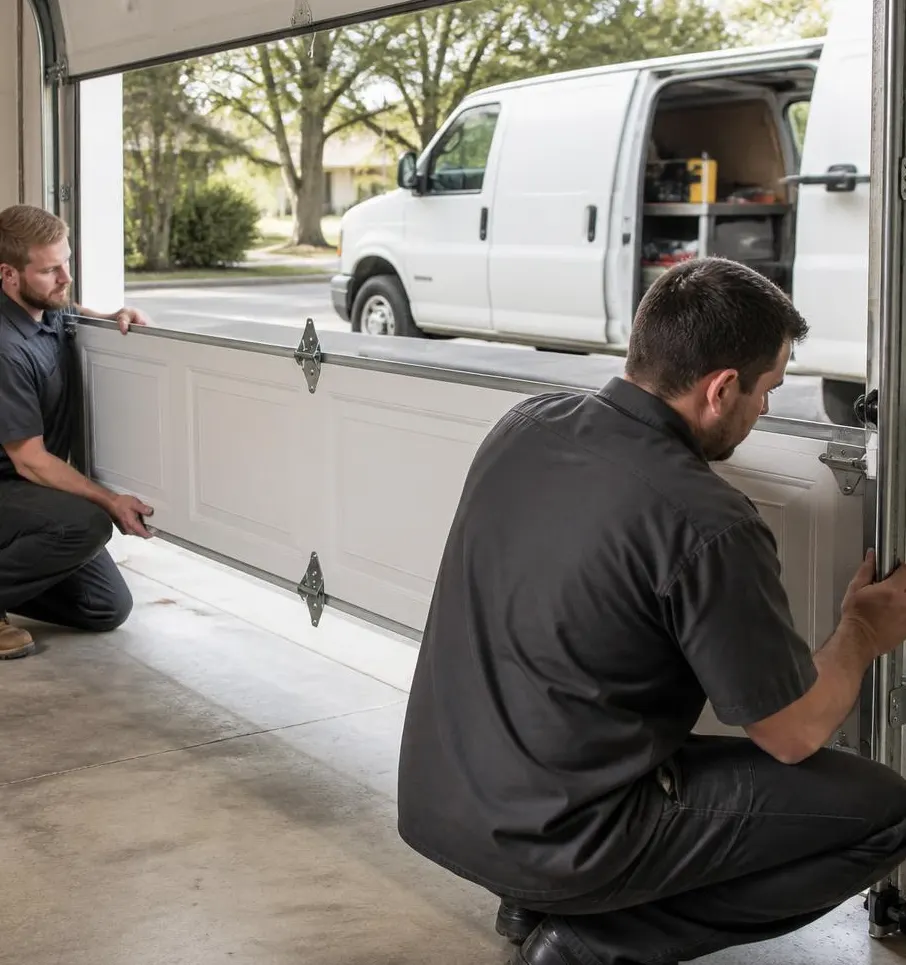
The Morning You Notice It
It's a cool October morning, you hit the opener button on your way out, and the door hesitates for a second before it lurches into motion. Or maybe it closes with a new rattle, or one side seems to drop a beat before the other catches up. Nothing dramatic — the door still works — but you clock it, and then you're running late, so you drive off and tell yourself you'll look at it later.
Fall is actually the right time to look at it. Around here, garage doors go from mild, humid summer air straight into cold mornings, road salt tracked in on tires, and big temperature swings that make metal contract, hardware loosen, and old grease stiffen up. A loose roller or a dry hinge that's merely annoying in September can turn into a stuck door or a snapped cable on the first single-digit morning in January. Running through a short check now, before the cold really sets in, is the cheapest insurance you'll find for your garage door all year.
Tools You'll Need
- A step ladder
- A flashlight
- A socket wrench or adjustable wrench
- Garage door lubricant (a silicone-based or lithium-based spray made for garage doors — not WD-40, which washes grease out rather than replacing it)
- A rag or shop towel
- A soft brush or old paintbrush for debris
The 20-Minute Routine
- Look at the tracks first. With the door closed, walk both sides and shine the flashlight along the vertical and horizontal tracks. You're looking for dents, rust spots, or gaps where the track has pulled away from the wall bracket. Salt spray and humidity swings can cause surface rust on tracks over a few seasons, especially near the bottom few feet where road salt and moisture collect on tires and boots.
- Tighten the visible hardware. Using your wrench, go over the hinges, track brackets, and roller brackets and snug anything that's loose. Garage doors flex every time they open and close, and that repeated motion works bolts loose over months. This is the single most common cause of a new rattle or squeak.
- Clean and lubricate the moving parts. Wipe down the rollers, hinges, and tracks with the rag to remove dust, cobwebs, and old grease buildup, then apply a light coat of garage door lubricant to the hinges, roller bearings, and the track itself. Don't oversoak it — a light film is enough, and excess spray just attracts grit. This step matters more going into winter than any other time of year, since cold temperatures thicken old lubricant and make everything move stiffer and louder.
- Check the weatherstripping along the bottom and sides. Look for cracking, gaps, or spots where it's pulled away from the door. This rubber seal is what keeps cold air, blowing snow, and meltwater out of the garage through the winter, and it's inexpensive to replace if it's brittle or torn.
- Test the door's balance. Pull the release cord to disconnect the opener, then lift the door manually about halfway and let go. A properly balanced door will stay put on its own. If it drifts down or shoots up, the spring tension is off — note it, but don't attempt to adjust it yourself (more on why below).
- Test the auto-reverse safety feature. Reconnect the opener, close the door, and place a block of wood or a paper towel roll flat on the ground where the door will land. The door should reverse immediately on contact. Also test the photo-eye sensors near the floor on each side by waving a hand through the beam while the door is closing; it should stop and reverse.
- Replace remote and keypad batteries if they're more than a year old. A sluggish response or a remote that needs multiple presses is often just a dying battery, and it's an easy thing to fix before cold weather makes batteries drain even faster.
Where the Homeowner's Job Ends
Everything above is safe to do yourself with basic tools and a stable ladder. What you should not do yourself is anything involving the torsion or extension springs, the lift cables, or a door that's badly out of balance or off-track. These parts are under heavy tension, and a spring that lets go while someone is adjusting it can cause serious injury. If your balance test in step 5 showed the door drifting badly, or if you notice a stretched or fraying cable, a bent track, or the door hanging crooked, that's a job for a technician, not a weekend project.
When to Call Kane Garage Door
If your fall check turns up a loose track, worn weatherstripping you'd rather not replace yourself, or a door that isn't balancing correctly, that's exactly what our Garage Door Maintenance visits cover — a full inspection, hardware adjustment, and lubrication done right, plus a heads-up on anything likely to fail once the ice and road salt show up. If the issue is a spring that's lost tension, sagging, or visibly worn, our Spring Replacement service handles that safely with the right equipment, rather than leaving you to work under a loaded spring in your driveway. And if something fails outright on a frozen morning when you need to get the car out, that's what our Emergency Garage Door Service is for.
Twenty minutes now can save you a cold-morning breakdown later. If this fall check turns up anything beyond tightening a bolt or wiping down a track, call Kane Garage Door — we serve homeowners throughout Kane, Jerseyville, Grafton, Carrollton, White Hall, Eldred, Kampsville, and Hardin, and we'll get your door ready for winter before the first hard freeze hits.