
The Mistake Almost Everyone Makes First
When a garage door won't budge on a freezing morning, the instinct is to hit the opener button again — and again. It's tempting because it feels like the path of least resistance: no tools, no cold hands, just a button. But if the door is actually frozen to the slab or the tracks are iced up, repeated button presses just force the opener motor to fight something it can't win. The gears strain, the trolley can skip on the rail, and you can end up needing opener repair on top of whatever caused the stall in the first place. The other common move — chipping at the ice line with a screwdriver or pouring hot water on it — isn't much better. Hot water on a cold slab often refreezes within minutes as a harder, glassier layer, and a screwdriver can gouge the rubber weatherstripping, which then tears more easily all winter.
What You're Actually Seeing
Before getting into causes, it helps to know what symptom points where. A door that's visibly bonded to the ground along the bottom edge, with a thin ice line you can see, is a different problem than a door that opens but moves slower than usual, groans on the way up, or stops a few inches in and reverses. A door where the opener hums but the trolley doesn't move at all is different again. All three are common once overnight temperatures drop and stay down, especially after a day with melting snow or slush that refreezes after dark.
Causes, In the Order a Technician Checks Them
1. Ice Bonding the Panel to the Slab
This is the first thing to rule out because it's the most obvious and the easiest to misjudge. Snowmelt, slush tracked in from the driveway, or runoff from a thaw-freeze cycle can pool under the bottom panel and freeze solid overnight, gluing the door to the concrete. The fix is patience over force: use a hair dryer or a space heater held a safe distance away to melt the ice gradually, or apply a de-icer made for rubber seals (not rock salt, which degrades the weatherstripping over time). Once the bond breaks, the door usually opens normally — this is a symptom of weather, not a mechanical fault.
2. Weatherstripping Frozen to the Threshold
Even without a visible ice sheet, the rubber seal along the bottom of the door can freeze directly to a damp concrete threshold. This is common after humid stretches followed by a hard freeze — exactly the kind of swing this area gets in late fall and early winter. The seal grips just enough to resist the opener's pull, causing a brief stall before the door pops free with a thud. If this happens repeatedly, the seal is probably retaining moisture it shouldn't; checking the drainage slope of the slab and the condition of the seal itself is the next step.
3. Thickened Lubricant on Rollers and Hinges
Standard grease and some all-purpose oils stiffen in cold temperatures, turning from a thin film into something closer to wax. That stiffness adds drag at every hinge and roller, which is why a door can feel sluggish or noisy well before it ever gets near freezing-to-the-ground territory. The fix is straightforward: clean off the old lubricant and apply a silicone-based or lithium-based garage door lubricant rated for cold weather, applied to rollers, hinges, and the torsion spring itself — not the track, which should stay dry.
4. Spring Tension Shifting With Temperature
Metal contracts as it cools, and torsion springs are no exception. A door that was balanced perfectly in September can feel measurably heavier in January because the spring's effective tension has changed slightly with temperature and age. This shows up as an opener straining, a door that drifts back down partway, or a door that's hard to lift by hand when tested manually. This is also where risk goes up: a spring under tension that's already stressed by cold and age is more likely to fail outright, and torsion springs store enough force to cause serious injury if they let go while someone is working near them. This is not a DIY adjustment.
5. Ice or Debris Inside the Track
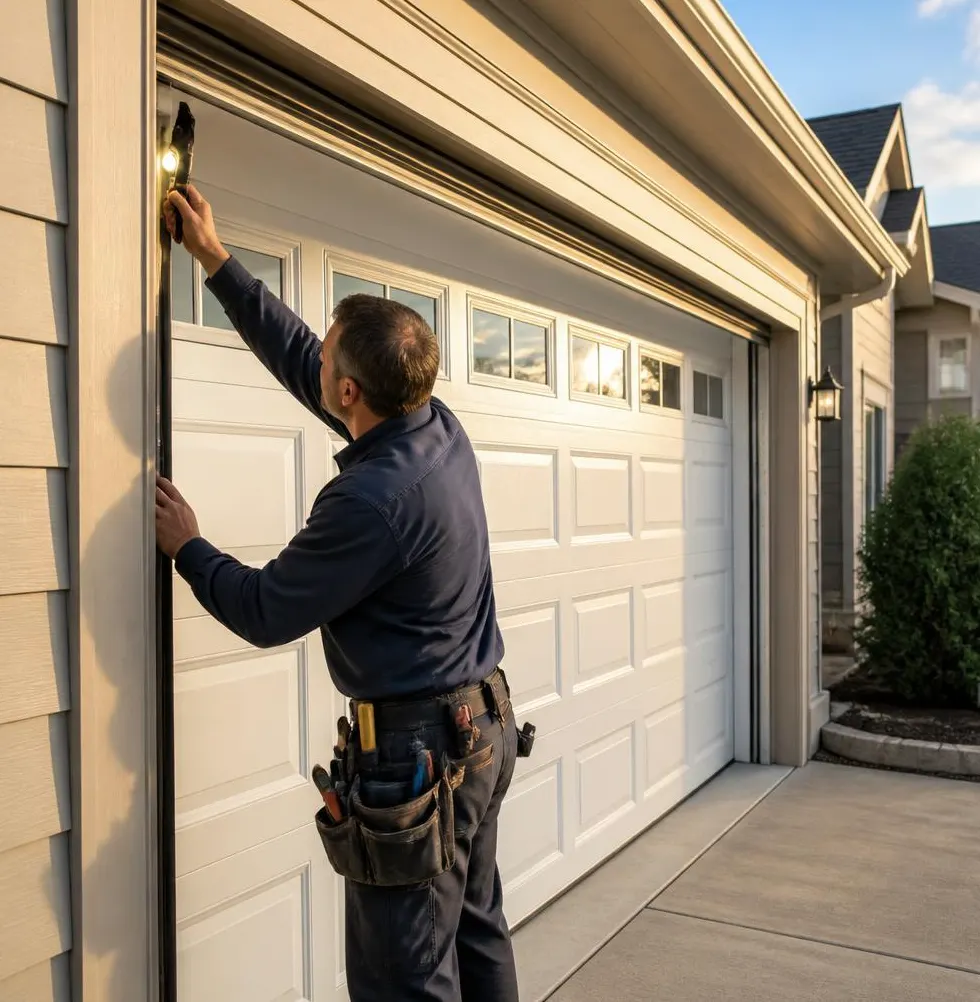
Blown snow, wind-driven ice pellets, or road salt spray from a windy driveway can collect inside the vertical or horizontal tracks. Even a small chunk of ice acts like a wedge, causing the rollers to bind at the same spot every time. A visual check with a flashlight along both tracks usually reveals this quickly, and clearing it is simple — but if it keeps recurring, the track alignment itself may have shifted slightly, which is worth having checked before it wears the rollers unevenly.
6. Opener Force Settings Not Matched to Winter Resistance
If everything above checks out but the door still reverses or stalls, the opener's force and limit settings may simply be calibrated for warmer-weather resistance. Added stiffness from cold rollers, a slightly heavier spring, and a stiffer seal all add up, and an opener set right at the edge of its tolerance will read that extra resistance as an obstruction and reverse. Adjusting the force settings is a quick fix, but it should happen after the mechanical issues are resolved — adjusting force to compensate for a bad roller or an out-of-balance spring just masks a problem that will get worse.
When to Call Kane Garage Door
If the door is still sluggish after clearing visible ice and re-lubricating, or if you've noticed it feels heavier than it should when lifted manually, that's a sign the spring tension needs a professional look rather than a guess. Our Garage Door Maintenance visits check lubrication, track alignment, and spring balance together, which is the combination most likely to prevent a cold-morning failure. If a door is actually stuck fast, straining against the opener, or stopped partway with no clear cause, our Emergency Garage Door Service can get it moving safely without risking the opener, the spring, or your fingers.
If winter mornings keep catching your garage door off guard, call Kane Garage Door — we serve Kane, IL and the surrounding area, and we'd rather fix it right the first cold snap than patch it every week until spring.